Author Archives: admin

Tea Harvesting

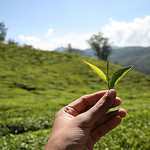
Woman Plucking Tea in Assam India

Tea Plucker in Assam by Diganta Talukdar CC-BY-2.0

For centuries the only way to harvest tea leaves was to hand pluck them, and in many countries that is still the primary means of harvest.  This may be intentional or may be due to the lack of capital necessary to purchase the equipment.  For those farms who chose to use modern agricultural equipment there are multiple options from which to choose that can be implemented at various points in the harvesting season.  For example, in Japan, some farmers choose to hand pluck the first flush of a season and use mechanical means for subsequent harvests.

Tea does have a harvesting season, though the length and number of flushes varies widely. In China it is typically in the spring and fall. As mentioned in our earlier blog Camellia Sinensis, season is effected by water, location and temperature.  During a harvesting season the tea is usually picked once every week to two weeks.  In places where harvesting can occur year round, during the peak season, the tea can be picked multiple times during a week.

As you can imagine plucking tea by hand is very labor intensive work where typically, the bud and first two leaves are plucked.  In regions of China, on top of plucking the tea leaves, the pluckers are hiking up and down mountainous terrain to get to the leaves.  In some of the oldest farms, the pluckers are also climbing into the old ungroomed tea trees to pluck.   Pluckers will carry some kind of means to collect leaves as they pluck, often a bag or bamboo basket.  They will add leaves as they pluck and when full they carry their harvest back to the farm before returning to the fields to keep plucking.  In many countries women make up the predominant portion of the plucking workforce.  In China, this is driven by the belief that women have just the right touch in plucking leaves, not leaving the tea tree brushed or damaged at the breaking point.  This is extremely important for future harvests, because the tea tree will not continue to produce leaves on a branch where it is bruised or damaged.

Tea Harvesting by Machine in Japan

Tea Harvesting by Machine by Oli Studholme CC-BY-2.0

Knowing that the tea tree is sensitive to where the plucking occurs, it is hard to imagine how big farm trackers or automatic pruners could to the same job.  However, the Japanese have implemented laser technology to allow their automatic pruning machines to be hand-pulled over the tea trees with cuttings sucked into either bags or shoots that go back to the main staging area for the plucked tea.  This laser guidance allows the pruners to cut at just the right place and angle so the tree continues to grow from the same branch.  Since oxidation begins immediately after harvest it is critical, especially for green tea, to start the manufacturing process as soon as possible and this system allows much faster transport of leaves to processing facilities.  I imagine that other countries, like Sri Lanka, which are experiencing labor shortages on their tea farms as younger generations leave the farm for jobs in the cities, will eventually turn to this technology to allow harvesting to continue.

While many countries still utilize substantial labor to harvest tea, Argentina plantations almost exclusively use large elevated tractors that drive above the tea trees to harvest tea leaves.  Machine harvested leaves don’t usually have the bud and two leaf combination but individual leaves instead, some with and some without stems.  Given that the plantations in Argentina are able to harvest year round, it is not a surprise that they use equipment.

Mechanically harvested tea is not always destined to tea bags.  Quality loose leaf tea can be harvested by machine, you will just not see a bud and two leaves in the tea.  Instead you will find single leaves and buds and in some cases no stems on the leaves with an almost perfectly straight edge at the base of the leaf.  As for whether plucking by hand or machine effects the quality of the end product, it is hard to imagine that it does.  Of course, I am just an American that is accustomed to John Deere tractors harvesting everything from oranges to wheat, so why not tea?

by Hillary Coley

Follow me on Twitter @HillaryColey or @DominionTea

Aged Photo of Tea

Why are there no tea plantations in the US?

You would be forgiven for believing that there are no tea plantations in the United States.  Aside from China, Japan, India, Sri Lanka, and Kenya there aren’t any other suitable locations for growing tea right?  If you read our earlier blog about where tea is grown you will note that the US does indeed grow some tea, though at very small quantities.  That got us thinking…  Why is it that American farmers never took up tea?  After all, tea does grow at a wide range of elevations and latitudes.  Much of the continental US from North Carolina and Tennessee southward lies at about the same latitude of Shizuoka prefecture, which leads Japanese tea producing regions.    So why is it that tea isn’t generally produced in the US?  Perhaps the most significant reason dates back to an 1897 report by the U.S. Department of Agriculture in which the author, William Saunders writes “At the lowest estimate, it costs about eight times more to pick one pound of tea in South Carolina than the prices paid for the same service in Asia.” (Saunders, 1897)  This one sentence appears over and over as justification for why tea isn’t produced here in America.  In short, it’s too expensive to compete with the cost of labor in Asia.  A hundred years later this thought process is strikingly familiar, with Asia continuing to produce all kinds of things with dramatically lower labor costs.  But is the lower labor rate really the reason or, as the report also suggests, might it have been the shortage of skilled growers and manufacturers was the real stumbling block to getting tea off the ground in the U.S.

Historical Events from the Civil War to 1900.

US History Timeline Surrounding the Tea Farm Experiment

At the time of the USDA study there was significant upheaval in the United States where the Civil War was still very much on the minds of the population. The American South, which arguably had the better climate for Tea, was struggling to rebuild, had suffered substantial loss of capital, and struggled to adapt to an economy not based on slavery.  Indeed, a report from the Debow’s Review, a widely circulated magazine of the time, published in October 1867, made it quite apparent that landowners felt the freed slaves “have ruined many Southern planters who had but little capital and endeavored to work their plantations on shares.” (Debow, 1867)  With the US Agricultural scene adapting to producing crops without slave labor, the idea of introducing a new agricultural product that required manual picking of leaves and a manufacturing process that was still foreign to the US would be laughable.

The current focus by many US consumers on locally grown or raised produce, wine, and cattle might give tea yet another chance in the US economy.  There are a number of tea growers in Hawaii producing specialty teas including Black, White, Green, and Oolong varieties.  Back on the mainland, there is one commercial operation in South Carolina where tea has been grown and abandoned multiple times since the 1800’s.  More recently the US League of Tea Growers has been formed in an attempt to bring together growers from across the country to share knowledge, develop best practices, identify or create cultivars suitable to the U.S., and to promote the U.S. tea industry.

Aged Photo of TeaAs we close out this blog it’s important to take away that there is tea being grown and produced here in the United States.  Over the coming years there may be greater availability of specialty tea products from across the country.  Perhaps tea does have a place in the American agricultural economy and perhaps, all those years ago, folks should have more fully read the fateful report for the USDA considering “Dr. Shepard stated that if he were twenty years younger he would plant 500 acres as rapidly as he could procure the plants. This indicated his faith in tea raising as a profitable industry.” (Saunders, 1897)

What do you think?  Is there a place for American produced teas?  If they were more expensive, yet locally produced from a farm you could visit, would you seek them out?

Want to know when the next blog comes out?  Follow us on Twitter @DominionTea, @DavidSColey, or @HillaryColey or follow Dominion Tea on Facebook.

Works Cited

Debow, J. D. (1867, October). Agricultural, commercial, industrial progres and resources. Debow’s Review.

Saunders, W. (1897). An Experiment in Tea Culture, A Report on the Gardens of Dr. Charles U. Shephard, Pinehurst, S.C. Washington: United States Department of Agriculture, Division of Gardens and Grounds.
F4JYMS9RYPXP

Terroir of Tea

Tea Plantation

A Tea Plantation somewhere in Alishan
By Alexander Synaptic (Flickr id)
CC BY-SA 2.0

Terroir (ter-war) is used to define the characteristics of a place (soil, water, altitude, latitude and climate) that effect the taste of a final agricultural product.  Wine is the main agricultural product defined by terroir.  The French really drove the use of terroir in describing agricultural products with its regulations requiring use of region in labeling of French wine. For example, wines produced in the Bordeaux region of France are classified by a sub region in relation to where they are to the Garonne River – Saint-Estèphe, Paulliac, Saint-Julien, Margaux, Graves, Saint-Émilion and Pomerol.  These classifications were originally made in 1855 and have been adhered to since then because they have helped the producers to distinguish their products from each other, define quality and drive up prices.  Tea can also be defined by terroir; the only problem is that the producers of tea are not always using this to their advantage.  India is one exception – Assam, Darjeeling, Kangra, Dooars, Terai and Nilgiri teas are all named after the region in which they are grown and marketed in a fashion that helps the consumer associate the region to the flavor of the final beverage.

So what conditions does tea need to grow?  To its advantage, the tea plant is a very versatile perennial, so it can grow in a variety of soil types.

Photo of Dragon Well Plantation

Dragon Well Tea Plantation – Hangzhou
By Dave Proffer (Flickr id)
CC BY 2.0

However, for optimal production the soil should be acidic, between 4.5 to 5.5 ph., loose enough to allow the 6 foot tap root to burro down to its preferred length, and contain a good mix of nutrients (Nitrogen, Magnesium, Calcium, etc.) that the tea plant uses to grow.  Like other plants, it will strip nutrients from the soil necessitating replenishment via some manner of fertilization.  The Japanese use grasses to re-fertilize their tea plants, which influence the taste of the final tea and is credited by the tea farmers for the complex flavors of their teas.

Five hours of direct sunlight is optimal, however, less light disturbs the chloroplasts in the tea leaves, creating more aromatic oils and slowing growth.  This is why high altitude teas are considered the higher quality tea, they get between 2-3 hours of sunlight, creating more aromatic oils.  Those oils create the complex flavor of those teas.  More than five hours and plant will continue to grow, but the flavor will be dramatically different.

The tea plant likes lots of water, but doesn’t want to sit in it.  Plants need at least 50 inches of rain annually and 70-90% humidity.  By definition the water and humidity requirement put the plant in the sub-tropic to tropic zone, and while it can handle some weather variation it cannot survive prolonged dry seasons or freezing.

Latitude effects terroir through the length of the growing period.  The closer to the equator (think Kenya and Argentina), the longer the growing period.  In Kenya, tea is harvested year-round while it is only harvested twice a year (spring and fall) in most Chinese regions.  Tea in Taiwan is harvested five times a year between April and December with the July and August harvests continually ranked as the finest.

Photo of Munnar Plantation

ST831850 – Munnar tea plantation
By fraboof (Flickr id)
CC BY-SA 2.0

So how does one use terroir when purchasing tea?  Look for where the tea comes from, and if possible search for single origin teas from one tea plantation.  This will allow you to identify the flavor unique to the tea produced in that region, for instance Assam tea is consistently malty in flavor.  Dongding Oolong produced in the Nantou county of Taiwan is said to gets its unique award winning flavor from the constant fog in this mountainous region.  There are many black teas from China associated with the provenience it is grown it.  A Yunnan black tea tastes very different from a Fujian black tea.  So treat your teas like wine, know where they come from, learn their flavors and enjoy comparing them.  It makes drinking a cup of tea a truly special experience.

What do you think?  Can you taste the terrior in your tea?

@HillaryColey

Where is Tea Grown?

We recently attended a tasting session featuring teas from around the world. The teas were outstanding to be sure, however, they represented teas from only a small portion of the world. The countries represented included China, Japan, Tibet, India, Sri Lanka, and Kenya and provided a very diverse set of teas. These included white, yellow, green, black, dark, and even purple teas. But our tasting from “around the world” barely even scratched the surface. There are a huge number of countries growing teas. In fact, more than 50 countries grow tea today including many from Asia, a good number from Africa, and some perhaps surprising locations like former Russian states, Iran, Argentina, Brazil, and yes, even the United States, though not always at a high enough to be globally competitive. While the top four growers (China, India, Sri Lanka, and Kenya) far and away surpass the others, tea production is very much a global business. The average American consumer tea is most likely from China, India, Sri Lanka, or Kenya. However, to illustrate just how global the business is, a somewhat dated report by the U.S. Department of Labor noted in 1996 that Germany, which grows virtually no tea, has consistently been one of the top countries supplying tea to the US market (Department of Labor, n.d.)!

China and India account for 55% of global tea production.

Countries grouped by relative global share of tea production. Based on 2011 United Nations Food and Agriculture Organization data. http://www.fao.org/statistics.en/ (Full Tableau Visualization)

Tea as a Global Commodity

Tea is the second most consumed drink in the world, behind water, and demand continues to grow year after year. While tea is consumed in the form of loose leaf, bagged tea, and chai, innovations in ready to drink teas, and powdered tea drinks in Asia continue to drive additional growth. One of the fastest growing segments in Asia, according to Euromonitor (Friend, 2013), is the powered tea segment with products like Xiang Piao Piao, which is a single serve cup of instant powered tea in a variety of sweetened flavors. According to the UN’s Intergovernmental Group on Tea, demand for black tea has exceeded supply since 2009. This long term demand is expected to keep the price of tea high for years to come (United Nations, 2012).

Coffee Rust

Photo of Coffee Rust – by Carvalho et al – CC-BY-SA 2.5

Where demand exceeds supply the price generally stays high until supply rises enough to meet that demand so it is reasonable to expect that more countries will see commercial tea planned and those already in the business may increase both the land area under cultivation and work to improve the yield of existing plantations. Additionally, some coffee plantations may choose to change over to tea. This is because coffee rust is increasingly impacting coffee plantations in South America and pushing down coffee production rates. Rust isn’t actually new, it’s what drove Sri Lanka to switch from growing coffee to tea back in the mid to late 1800’s. However, it is now impacting South America, parts of which are seeing the worst outbreaks of coffee rust since it took hold in the 1970’s. The U.S. Department of Agriculture is expecting significant decline in crop yields for the 2013-14 season on top of already significant declines in 2012-13 (U.S. Departement of State, n.d.)

Given the growing appreciation and demand for ready-to-drink products and specialty teas in the United States, Canada, and other parts of the world we may very well have increased opportunity to experience an even wider variety of tea products from a wide variety of countries in the years to come.

[ See Related Post:  Tea vs Coffee Imports – Who are the superpowers? ]

Works Cited
Department of Labor. (n.d.). ILAB – TEA. Retrieved from Bureau of International Labor Affairs: http://www.dol.gov/ilab/media/reports/iclp/sweat4/tea.htm

Friend, J. F. (2013). Global Tea Opportunities in Retail and Foodservice. World Tea East. Atlanta: Euromonitor.

U.S. Departement of State. (n.d.). Retrieved from Coffee Rust Outbreak in Central America, Southern Mexico, and the Caribbean: http://www.state.gov/e/eb/tpp/abt/coffee/index.htm

United Nations. (2012, February 29). UN News Centre. Retrieved from Global tea prices set to stay strong this year, says UN agency: http://www.un.org/apps/news/story.asp/story.asp?NewsID=41411&Cr=Food+Prices&Cr1=#.UoS9i94o601

Camellia Sinensis

All true tea comes from the same basic plant, camellia sinensis. It doesn’t matter if its green, white, black, oolong, or puerh, they all start from the same source. True tea is made from the leaves and leaf buds of the Camellia sinensis not its flower. C. Sinensis does ineed have flowers. They are small white flower with six to eight petals and a yellow center (Harvard University, 2013. The seed of the plant is about 1 cm in diameter, the same diameter as a wine cork, although round. C. sinensis is an evergreen plant growing from sea-level to almost 7,000 feet above sea level.

Plucking Tea Leaves

Plucking Tea Leaves – By Ashwin Kamath
CC-BY 2.0

Camellia Sinensis Varieties

There are two main varieties of this plant that make up the majority of tea consumed on the planet, C. sinensis var. sinensis and C. sinensis var. assamica. Var. sinensis is the tea plant originating from China. Var. assamica is the tea plant originating from India, yet there are many cultivars of tea that are used in production. Broadly, cultivars are plants that have been selected and propagated by humans because they possess certain desirable traits, like surviving rapid weather changes. Given that the Chinese first documented the drinking of tea in 2737 B.C.E. and the first tea plantations are mentioned in 1000 B.C.E., there has been ample time for humans to intervene and cultivate the tea plants with the characteristics they want.

There are several differences between the assamica and sinensis varieties. Assamica has larger leaves, can handle the lower elevations and harsher sun better than sinensis. Both varieties prefer humidity, well-drained soil, and at least 50 inches of rain a year. This means that the plant grows best in tropical and sub-tropical climates. Some C. sinensis cultivars can handle temperatures below 54 degrees Fahrenheit, but neither can handle prolonged exposure to temperatures at or below freezing. For ease of harvesting both varieties are kept in low hedge like shape by most plantations. However, if left unkempt the sinensis variety has been recorded as turning into a tree as high as 50 feet; the same height as a mature willow tree. C. sinensis var. sinensis are mainly found in China, Japan, and Taiwan. C. sinensis var. assamica are found in India, Nepal, Sri Lanka, Kenya and Argentina.

Camellia Sinensis Tea Tree by Mt Fudo

Tea Tree by Mt. Fudo by STA3816, CC BY-SA 2.0

Various pests cause problems for C. Sinensis, like caterpillars and moths, though not all pests are bad. For example, harvesting it after an infestation of leaf hoppers, a small green grasshopper like insect, produces a very fragrant tea. Some of the most highly-prized oolongs, especially from Taiwan, are created from tea leaves that have been recently munched on by the leaf hoppers. By biting the leaves, the leaf hopper causes the plant to produce different enzymes that ultimately create the complex flavors in these oolongs. It is also worth noting that, like other plants, C. sinensis produces caffeine, as a defense mechanism against insects such that it often is grown in near organic conditions by default.

The amount of rain, temperature and soil affect the favor of the final tea product that we consume. In general, the better tasting, more complex teas are grown at higher elevations because the growing seasons are shorter. The length of a growing season is determined by the right mix of water, sun light and temperature that the plant needs to sprout to new growth. If that is not present all the time, the plant goes dormant, allowing it to store up energy for when the conditions are right for growth again. The “energy” comes from the organic chemicals found inside the leaves. It is these organic chemicals that produce the flavor of the tea. At lower elevations, the growing seasons are longer, and in some places, like Kenya, are year round, which does not give the plant a chance to rest.

Tea 'Camellia Sinensis' Plantation in Sri Lanka

Tea Plantation, Sri Lanka – by By Purblind – Flickr
CC BY-SA 2.0

Camellia Sinensis and Climate Change

Lastly, it should be noted that many of the tea producing nations are worried about the effects of climate change on tea. The Kenyan Tea Board is working with local tea farmers to improve water storage and soil conservation measures while also researching the use of drought resistant cultivars of tea to mitigate the effects (The Tea Board of Kenya, 2012). The Tocklai tea experimental station in the Assam region of India, which has recorded the temperature and rainfall for over 100 years, has reported an increase in the temperature and a decrease in rain, affecting tea yields and quality of that tea. The drop in yields has not really been seen on the market as more small farmers have entered into growing tea, which has off-set the drop, but the Tea Research Association expects the effects to surface soon (Das, 2013). Given the importance of C.sinensis to many cultures on this planet I suspect we will see cultivars that can keep producing in extreme weather conditions. I can only hope the taste of this wonderful plant is not lost in the process of preserving it.

Works Cited

Das, B. (2013, September 9). Climate Change Dries Up India Tea Production. Retrieved from Aljeezera: http://www.aljazeera.com/indepth/features/2013/09/201398144844505310.html

Harvard University. (2013, November 1). www.efloras.org. Retrieved from Floras.org: http://www.efloras.org/florataxon.aspx?flora_id=2&taxon_id=200014043

The Tea Board of Kenya. (2012, January 16). News – 2012: Responding to Climate Change. Retrieved from The Tea Board of Kenya: http://www.teaboard.or.ke/news/2012/13jan2012-c.html