Author Archives: admin

Tea Eggs and the Chinese Spring Festival

The lunar new year is fast approaching and with it a chance to look into the Chinese culture and find new ways to use tea. The Spring Festival, which used to be the Chinese New Year, was renamed in 1913 when the Communist Party took over China and put the country on the Gregorian calendar (this is our modern calendar which was introduced in 1582 by Pope Gregory XIII). The Spring Festival corresponds with the lunar new year, which starts this year on February 19th. In Chinese culture, It is considered a time for cleaning, gathering of families and celebrating a fresh start.

Like every family gathering, no matter which country you live in, there is plenty of food. A typical dish, which uses tea in a unique way, are Chinese tea eggs. These are basically spiced hard boiled eggs. The combination and concentration of spices are unique to every family. So while I use one combination below, feel free to modify for your taste.

Chinese Tea Eggs Spicing

Spicing for Chinese Tea Eggs

Chinese Tea Eggs

  • 6 large eggs
  • 4 tablespoons of Soy Sauce
  • 1 tablespoon of Black or Puerh Tea (traditionally this is made with Puerh)
  • 1 small cinnamon stick
  • ½ tablespoon anise seeds (3 to 4 Star Anise if you happen to have a good spice shop nearby)
  • 1 tablespoon dried orange peel
  • ½ tablespoon peppercorns

You will need tongs, a bowl with ice and water to cool the eggs and a spoon to crack their shells.

Place the eggs in sauce pan or large pot. You will want the pot big enough to hold the eggs in a single layer and allow you to pour in enough water to cover the eggs entirely. Place the eggs in the pot and fill it with water. Bring the water to a boil and then lower to simmer and cook for 10 minutes. Remove the eggs from the water and put into the bowl with ice water. This will cool the eggs enough for you to handle them without burning yourself.

Chinese Tea Eggs

Completed Tea Eggs

Assuming none of the eggs broke during the initial cooking, just leave the water in the pot as you will be putting the eggs back in it. If one did, drain out the water, it will be foamy, wipe out the pot and fill with fresh water. Pull an egg out of the ice water and use a spoon to crack the egg shell. You are trying to make a lot of small cracks without removing the shell. Don’t worry if you lose part of the shell, just crack the entire shell then place the egg back in the pot. Do this to the remaining eggs.

Once all the eggs are back in the pot, add in the soy sauce, tea and spices. Add more water if necessary to get the liquids above the eggs. Turn the heat back on and bring the water up to a small simmer and allow to cook for at least 2 hours, if you want a darker web on your eggs you can simmer up to 3 hours.

This makes a salted and slightly spicy hard-boiled egg that is also colored by the tea and soy sauce.

Enjoy the lunar new year with a new way to use tea.
Black Fusion Doke Estate and Bihar Tea

Black Fusion Loose Leaf Tea from Bihar India

Black Fusion, Doke Estate, India

We continue to be fascinated by India and a recent addition of Black Fusion from Doke Estate in the state Bihar only feeds our interest in this dynamic and complicated country. In prior blogs we’ve spent some time discussing Darjeeling, Assam, and even Nilgiri far to the south and west of the country. As we add Black Fusion to our offerings we figured it would be great to provide a bit of background to this region which is far less well known for tea.

Doke Estate

Doke Estate, established in 1998 originally for CTC production, is located on the banks of the Doke River in Pothia within the Kishanganj district of the state of Bihar.  The district technically borders both the Darjeeling District of West Bengal and the country of Nepal, though is actually quite flat, sitting about 800 ft above sea level. This is in dramatic contrast to high grown tea estates of Darjeeling ranging between 4,000 and 6,000 ft in elevation. Owned by the well known Lochan family, this estate was built on land previously thought to be useless for agricultural purposes and is now used for hand made orthodox teas. The nearby Doke River, now with water year round, used to be monsoon fed and is now providing water for irrigation thanks to a nearby hydro-electric power dam and making tea production possible. While their Black Fusion has garnered a lot of attention the estate does produce other hand-made teas as well including green and white teas.

Kishanganj and Pothia

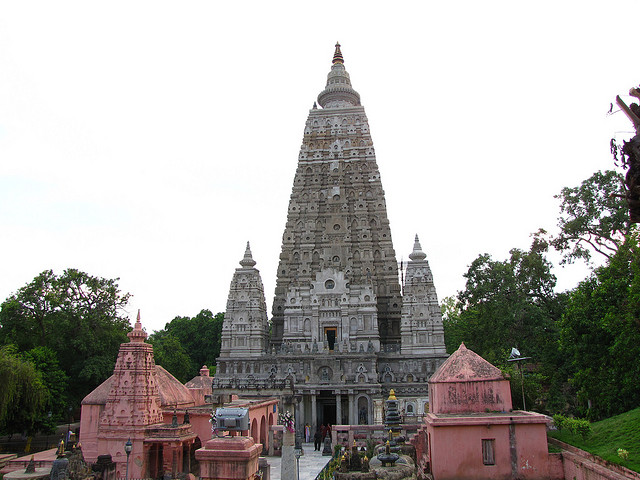
Bodh Gaya - Pilgrimage site for followers of buddhism.

Mahabodhi Temple at Bodh Gaya by Man Bartlett, CC BY 2.0

Pothia, where Doke Estate sits, and the broader region of Kishanganj in Bihar isn’t nearly as well known in tea circles as its nearby neighbors of Assam and Darjeeling. While it has had tea plantations since the 1990’s it has struggled to develop it into a large industry and still must rely heavily on processing facilities in West Bengal. However, the industry has continued to grow bringing much needed jobs to the region and slowing migration away from the district.  (Prasad)

Tea aside, this district which at one time was part of Nepal, is about the size of the Hawaiian island of Maui with a population about the size of Idaho. It is one of the poorest regions in India with a 30% literacy rate (~18% among women) and has suffered severe floods and high rates of Polio infection leading UNICEF and other organizations to organize large efforts to immunize large parts of the population.

The state of Bihar is well known in Buddhist circles as it is home to Bodh Gaya, the most holy place on earth for its followers, and a UNESCO World Heritage Site.

Black Fusion, Doke Estate

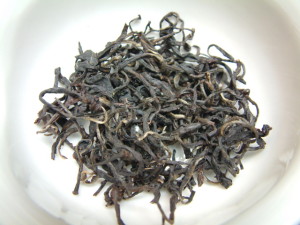
Doke Estate, Black Fusion leaf and liquor.

A fresh cup of Black Fusion.

We’ll admit to choosing to add Black Fusion before learning a lot about Bihar and now that we have, we hope to learn more. The 2014 Black Fusion is an exceptional black tea. This tea is unique in that it carries qualities of both assam and darjeeling teas yet is grown at a low elevation on flat land. The flavor is fruity with a clean finish expected of assam.

In appearance this is a large, long wiry leaf which is beautiful to admire both prior to steeping and after infusion. The pluck is two leaves and a bud most of which are fully intact and unroll nicely when infused. Steep 3-4 grams slightly cooler than a typical black tea at about 195°F for a more complex buttery flavor profile or hotter with 205°F for a slightly bolder and more malty taste.  

Sources

Tea City status eludes Kishanganj, by Bhuvaneshwar Prasad, Oct 20, 2010, The Times of India, http://timesofindia.indiatimes.com/city/patna/Tea-City-status-eludes-Kishanganj/articleshow/6777156.cms

Evaluation of Social Mobilization Network (SMNet)- FINAL REPORT, January 2014, UNICEF, http://www.unicef.org/evaldatabase/files/India_2013-001_Evaluation_of_Social_Mobilization_Network_Final_Report.pdf

Kishanganj District Profile, http://www.kishanganj.bih.nic.in/District%20Profile.htm

Yellow Tea: Unique and Rare Chinese Specialty

Yellow tea is China’s rarest tea, due to the extensive manufacturing process to get the yellow hued leaves and liquor. Depending on current trends in China, yellow teas come and go in overall availability, making it more difficult to find these teas here in the United States, but they can be found.

History of Yellow Tea

There are a wide range of stories around the creation of yellow tea and when it occurred, without a lot of agreement around those circumstances. Yellow tea is currently manufactured in both the Anhui and Hunan provinces of China.

Yellow is a favorite color in China.

Xian, China – Temple at Night

It is thought that the tea was produced in honor of the emperor, though which one specifically is not really clear, with yellow being the imperial colors of all five imperial dynasties in China. In Chinese culture, yellow is considered the most beautiful color. It is associated with Yin and Yang and the perfect center of everything. Yellow is paired with red in decorating alters and imperial palaces and is also associated with heroism in China.

With yellow holding such an important place in Chinese culture, it is only natural for tea producers to experiment and ultimately produce a tea that is both yellow in color as a dry leaf and as the beverage.

Producing Yellow Tea

Yellow tea resides somewhere between white and green teas both in flavor and appearance. Like a white tea, it is picked as either only a bud or a bud and single leaf. However, it is steamed during production. Like other teas, yellow tea is picked, withered in the sun and then pan dried. However, at the end of the pan drying, it is then laid back out and covered with a damp cloth and allowed to steam for a few hours. It is then returned to the pan to dry and may then be wrapped again. This process of steaming and drying may be repeated several times until the tea reaches the required color. Keeping the buds and leaves whole while going between the pan and the steaming clothes requires great care, adding time to an already time consuming manufacturing process. The process ends with the final drying in the pan.

All of that work produces a tea that ranges from buttery to floral in flavor depending on which yellow tea you get and at what temperature you steep it.

Types of Yellow Tea

Ahnui Yellow Flower Yellow Tea

Anhui Yellow Flower (Ho Shan Huang Ya) Yellow Tea

Yellow tea is quite rare and there only a few available including Jun Shan Yin Zhen from the Hunan province and Huo Shan Huang Ya from the Anhui province.  Jun Shan Yin Zhen is bud only and tastes buttery with slight floral aroma.  The Huo Shan Huang Ya was originally a tribute tea dating back to the Ming Dynasty and brews with a floral aroma and slightly nutty taste.  These teas can be brewed at temperatures between 185-200 degrees Fahrenheit for 3-5 minutes for a cup. We would recommend a gaiwan for this tea so you can enjoy the beauty of the infused tea leaves.

So when you are in search of your next tea experience, keep your eyes open for these teas.  They are worth a try.

Genmaicha ‘Brown Rice’ Tea

Genmaicha Brown Rice Tea

Genmaicha Japanese Green Tea

We’ve blogged about Japanese teas before, including culture, cultivars, sencha, and gyokuro. We’ve even blogged about the use of a Kyusu for preparing Japanese green teas. This week we wanted to focus on another great Japanese tea, genmaicha. Also known as genmai cha, brown rice tea, or even popcorn tea, genmaicha is very popular in Japan and around the world even if its history isn’t that clear.

Genmaicha History

Unique flavor aside, the stories surrounding genmaicha are lots of fun though there seems to be plenty of fiction surrounding it. Paraphrasing the most colorful story, it is claimed that the tea was created during the 15th century by a Samurai and his servant. The story suggests that the servant was preparing tea for his master, and at the time tea was very expensive. As he poured the tea a few grains of rice fell from his sleeve as he poured the tea. So enraged was the Samurai that his tea would be ruined, that he drew his sword and cut the head off his servant then an there. Yet, instead of pouring out the tea, he sat back down to drink it and discovered that he actually very much enjoyed it.  In honor of his servant, named Genmai, he named this tea Genmai Cha.

Another story suggests that long ago, housewives, eager to serve green tea in their households, yet finding it to be extremely expensive, began mixing cheap brown rice to a smaller amount of green tea, thus enabling common folk to enjoy tea the same as the noble classes.

Infused Genmaicha or Brown Rice Tea Leaf

Infused Genmaicha Leaf

The most likely story of genmaicha seems to be that sometime in the early 1900’s, an inspired tea merchant in Japan sought to stretch expensive green tea a bit further and added brown rice to it. The wonderful nutty flavor of genmaicha has been with us ever since, remaining popular and growing in popularity outside of Japan as well.

Colorful as these stories are, and variations on all three stories abound, there seems to be little historical support for them. They may or may not have grains of truth surrounding the origin of Genmai Cha.  Regardless, Genmai means ‘brown rice’ and so Genmai Cha is literally translated to ‘brown rice tea’.

Genmaicha Ingredients

Genmaicha has historically been made of bancha and brown rice. Being a green tea made from later harvests, bancha was and still is much less expensive than higher grade sencha and gyokuro varieties. The use of bancha contributed to a reputation as a cheap tea in the past. Today, however, genmaicha is made with a variety of Japanese green teas including sencha and gyokuro as well. Additionally, genmaicha can be found infused with matcha to provide both a slightly different flavor and mouth feel.

Matcha Infused Genmaicha Brown Rice Tea

Genmaicha Infused with Matcha Powder

Finally, although genmaicha is sometimes called popcorn tea, it typically does not actually have popcorn. Brown rice, as its heated and toasted, will sometimes pop resulting in something that looks like popcorn yet is really popped rice.

The next time you are looking to have guests and want to serve them something interesting, you might consider telling a colorful story or two about the supposed history of genmaicha while serving them this delightful nutty tea.

White Tea: Bai Hao vs Bai Mu Dan

In the middle of a cold snap, there  is nothing better than enjoying a warm drink that reminds me of spring. White tea fits that bill beautifully. There are not that many pure white teas in the US market, there are plenty of flavored white teas. The two most commonly found here in the states are Bai Hao (Silver Needle) or Bai Mu Dan (White Peony) also known as Bai Mudan. These two teas couldn’t be more different in appearance or taste.

Bai Hao (Silver Needle Tea) White Tea

Bai Hao Silver Needle White Tea

Bai Hao Silver Needle

Bai Hao, or Silver Needle White Tea, is the grandfather of white tea. This bud-only tea is believed to have been around since the Song dynasty (960-1279 CE) but only appeared in the late 1800’s in European publications. The cultivar Da Bai of Camellia Sinensis is the plant typically used to make Bai Hao as it produces the longest and largest buds. Bai Hao is only picked in early spring, usually in April and consists of the buds from the first flush (first growth) of the season. These buds produce the longest of the silver hairs that appear on the outside of the leaf. The name Silver Needle comes from the appearance of needle shaped buds covered with downy hairs. The buds are typically dried in the sun, some may be dried in a drying room if it is large production or weather prevents drying outside. The tea is usually only 5% oxidized. Brewing this tea requires care as you do not want to put boiling water on it as it will burn the tea. If brought to a boil, the water should be cooled down to 170° Fahrenheit before adding the tea. It only needs to be steeped for 2-3 minutes and will produce a pale yellow drink with a smooth sweet flavor.

Bai Mu Dan (White Peony) White Tea

Bai Mu Dan White Tea

Bai Mu Dan White Peony

Bai Mu Dan was developed in the 1920s in Fujian as China worked to meet the demand for unique teas from the United States and Europe. Bai Mu Dan is usually a bud and either one or two small open leaves. When you look at the dried leaves they resemble small peony flowers; hence the name White Peony. The bud in Bai Mu Dan is shorter than Bai Hao typically as it is made from different cultivars of Camellia Sinensis. Bai Mu Dan is also dried in the sun. However,it is typically baked after drying resulting in a wide array of colors in the leaves from silver to the dark brown you would expect from a black tea. Still,the tea is only around 5-7% oxidized. This white tea can be brewed just like Bai Hao, however you should experiment with brewing it like an oolong, with a water temperature up to 190° Fahrenheit and 3-5 minutes of steeping. It produces a very different flavor  depending on how it is prepared. Brewed as you would a white tea you get a smooth floral tea. Brewed as you would an oolong (closer to 190°) and you will get strong muscatel flavors with a hint of nuttiness from the very pale yellow liquor. Unlike Bai Hao, this tea is used as the base for most flavored white teas, as it is produced in much larger quantities making it a more cost efficient.

Whether Bai Mu Dan (White Peony) or Bai Hao (Silver Needle), white teas are a smooth and refreshing addition to your tea collection.